Ghislaine Maxwell’s final effort to overturn her conviction and 20-year sentence for sex crimes has been denied by a federal court in New York. The Supreme Court rejects a universal injunction issued by an activist Federal Judge. Meta, the parent company of Facebook and Instagram, reaches a $17.1 billion settlement over its platforms’ addictive features to children. And the Trump Administration targets foreign hackers while a large federal contractor agrees to pay $21.5 million to resolve alleged employment discrimination violations.
Ghislaine Maxwell’s last-ditch appeal is rejected
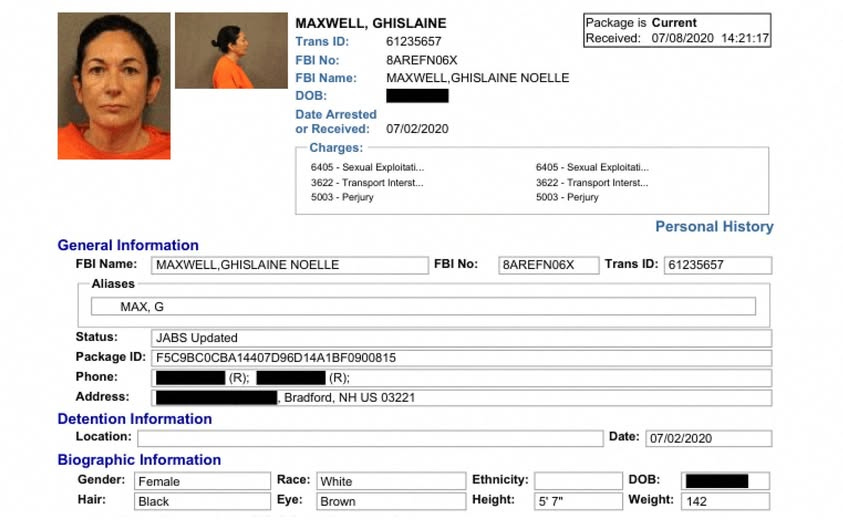
A New York federal judge has denied Ghislaine Maxwell’s efforts to vacate her convictions relating to her participation, with Jeffrey Epstein, in the sexual abuse of young girls that spanned over a decade.
Previously, Maxwell’s appeal of her conviction was rejected by the Second Circuit Court of Appeals in 2024 and then by the Supreme Court in 2025. After the Supreme Court declined to hear her case, Maxwell submitted a pro se petition to the federal district court in December 2025 that argued her convictions and sentence constituted constitutional and legal errors that resulted in a miscarriage of justice.
As the judge observed, Maxwell was convicted and subsequently sentenced to 20 years’ imprisonment based on “evidence of her guilt that was overwhelming.” That evidence included testimony from victims and corroborative documentary evidence that included photographs and flight records. She did not show a denial of her constitutional rights during her criminal trial. Moreover, Maxwell’s pro se petition was denied because she attempted to re-litigate issues that had already been rejected on her direct appeal.
The legal fight continues over election integrity
On August 24, the Supreme Court, in a per curiam opinion, stayed an injunction issued by Massachusetts District Court Judge Indira Talwani (an Obama appointee) that enjoined the Trump Administration from implementing an Executive Order “designed to maintain public confidence in federal elections.”
President Trump’s Executive Order, which seeks to ensure citizenship verification in federal elections, was challenged by a number of States and liberal organizations. The Supreme Court held that these States did not have standing to challenge the Executive Order because they had not suffered “concrete harm”: no obligations had been placed on the States and the President’s prioritization of prosecuting election-related crimes “does not inflict a traditionally recognized harm on the States.” The Supreme Court also observed that the Executive Order’s request that the Postal Service issue rules on mail-in and absentee ballots, at this time, imposed “no legal requirements on the States.”
The day after the Supreme Court’s ruling that overruled her injunction, Judge Talwani issued a strange memorandum that accused the Trump Administration of violating the preliminary injunction, though she declined to issue sanctions over that alleged violation. She also slighted the Supreme Court for accepting “the government’s feigned compliance.” This was followed up by an August 26 order from Judge Talwani that vacated her injunction.

In other news:
Meta, the owner of Facebook and Instagram, reached a $17.1 billion settlement with 47 states that ends a years-long case “that sought to hold the tech giant accountable for the role its platforms played in undermining children’s mental health.” Meta also agreed to institute daily time limits for children’s accounts and ensure age-appropriate content.
The FBI and DOJ seized domains used by Chinese state-sponsored hackers to “target U.S. critical infrastructure and other sensitive networks.” According to Attorney General Todd Blanche, “federal law enforcement investigated and disabled the PRC’s malicious software, the latest in a series of technical operations to dismantle indiscriminate hacking activities sponsored by the People’s Republic of China.”
The DOJ announced that federal contractor Deloitte “agreed to pay the United States $21.5 million to resolve allegations that Deloitte violated the False Claims Act by failing to comply with anti-discrimination requirements in its federal contracts and discriminating against employees and applicants on the basis of their race or sex.” The settlement agreement includes allegations that Deloitte took aggressive actions to discriminate based on race and sex “when making hiring, promotion, and staffing decisions” in violation of the anti-discrimination requirements of the Civil Rights Act of 1964.