Rumors that Justice Samuel Alito might leave the Court soon appear way overblown. He’s not going anywhere soon. Meanwhile, a majority of Supreme Court Justices appear ready to rule that Colorado’s discrimination against religious preschools is unconstitutional. And in DC, grand juries have refused to indict an individual for voter fraud and a Trump critic for false statements, while a Federal Magistrate Judge threw out false statement charges against two former FBI officials. Double standards remain, and our election results are likely to make that worse.
Reports: Justice Alito will remain on the Supreme Court
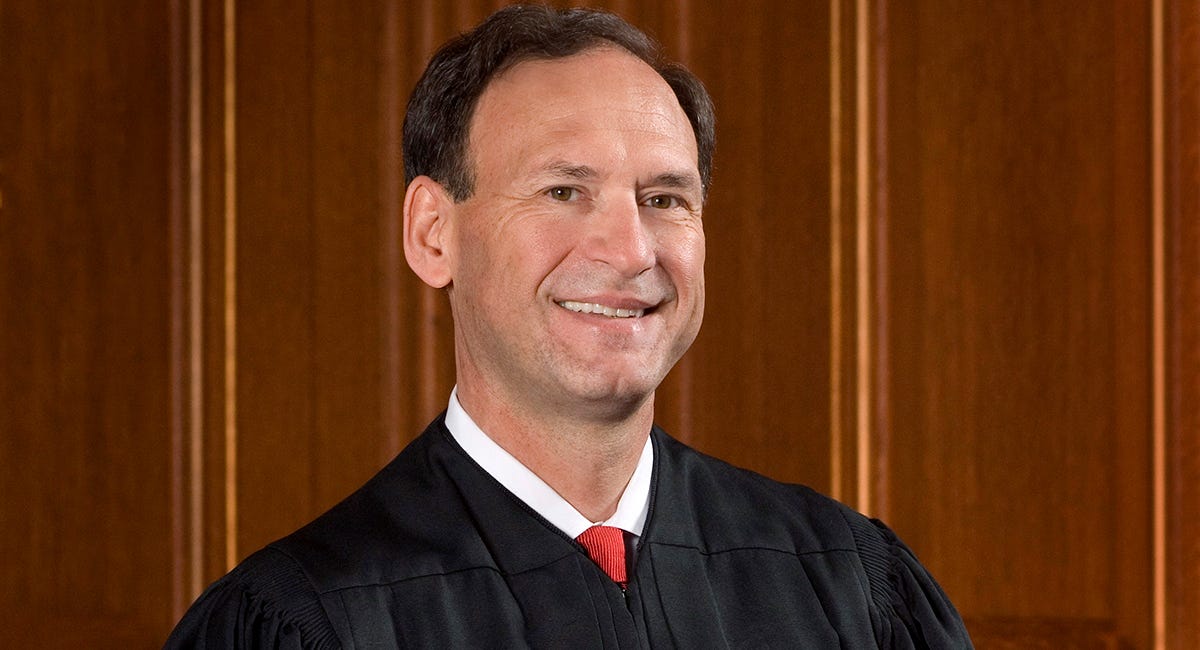
After this week’s midterms, which saw significant gains for the Democrats in both the Senate and the House, there has been a renewed focus on the future of the Supreme Court – namely whether Justices Clarence Thomas (age 78) or Samuel Alito (age 76) will retire before the Republicans lose their Senate majority in January.
Just one month ago, Justice Alito stated he thought about retirement earlier this year and that he would consider retirement next year as well. But even after the Democratic wins in the midterms, it appears that Justice Alito will remain on the Court for the indefinite future. According to reporting from The New York Times yesterday evening, Justice Alito “has told people close to him that he does not intend to retire immediately from the Supreme Court.”
Supreme Court appears ready to rule in favor of Catholic preschools’ religious discrimination claim
On November 3, the Supreme Court heard oral argument in St. Mary Catholic Parish v. Roy, which involves Colorado’s mistreatment of Catholic preschools and its exclusion of those schools from the State’s universal preschool program. According to observers, the Supreme Court’s conservative majority “offered clear support” for these preschools who allege that Colorado unconstitutionally violates their religious rights.
And at SCOTUSblog, it is thought that the Supreme Court appears “ready to hold that the exclusion of Catholic preschools in Colorado from the state’s universal preschool program violates the First Amendment.” If that holds true, this will be a significant win for churches and religious organizations and will further protect the faithful from discriminatory laws and policies.
D.C. grand juries refuse to indict – and false statement charges against former FBI officials are dismissed
Last Friday, a Washington, D.C., a grand jury rejected an effort to indict a voter who is alleged to have voted in two jurisdictions in the 2024 election. This follows a grand jury declining to indict vocal Trump critic Cassidy Hutchinson relating to her testimony concerning the events at the U.S. Capitol on January 6, 2021. Hutchinson previously admitted that she lied in a Congressional deposition – even telling her attorney “I just lied.”
And on Monday, November 2, Federal Magistrate Judge Zia M. Faruqui dismissed the false statements case against two former FBI officials who were accused of lying to Congress regarding the Hunter Biden laptop investigation. Judge Faruqui made his ruling from the bench, where he questioned why it took approximately three years for the false statements to be charged. He further suggested that the DOJ’s decision to bring the case was based on politics. The Government had argued that the Biden DOJ was previously put on notice of issues with the testimony of these FBI officials – information it chose to ignore.
Judge Faruqui has not yet filed an order explaining his decision to dismiss the case. As he noted on Monday, prosecutors may still seek the indictment through a grand jury or “appeal his decision to the district’s chief judge.”
Alaska Judge dismisses Trump Administration’s ballot integrity lawsuit
On Sunday, November 1, a Federal Judge in Alaska dismissed the Trump Administration’s lawsuit that sought to separate ballots that included Daniel J. Sullivan, who was recruited by Democrats to enter the Alaska Senate race “as part of a plan to reduce the votes of Alaska’s Republican incumbent Senator, Dan S. Sullivan.” The Trump Administration had argued that segregation and preservation of the ballots was necessary to ensure that voters were not confused in casting their votes.
The Court’s dismissal order stated that the segregation of ballots cast by voters of Daniel J. Sullivan to allow for further investigation by law enforcement “is not a remedy that this Court can or should order.” It further concluded that such acts would “clearly violate Alaskans’ right to a secret ballot.” Though the Court denied the relief that the Trump Administration had requested, it also noted that Alaska law requires ballots to be preserved for 22 months after the election.
Currently, the Alaska race is exceedingly close. Democrat Mary Peltola leads Republican Dan S. Sullivan by only hundreds of votes. The remaining mail-in ballots may not be fully counted until next week. Alaska’s ranked-choice tabulation will take place on November 18.
Per Sidney’s opinion, ranked-choice voting is how the democrats took control of and ruined California. It should not be allowed anywhere.
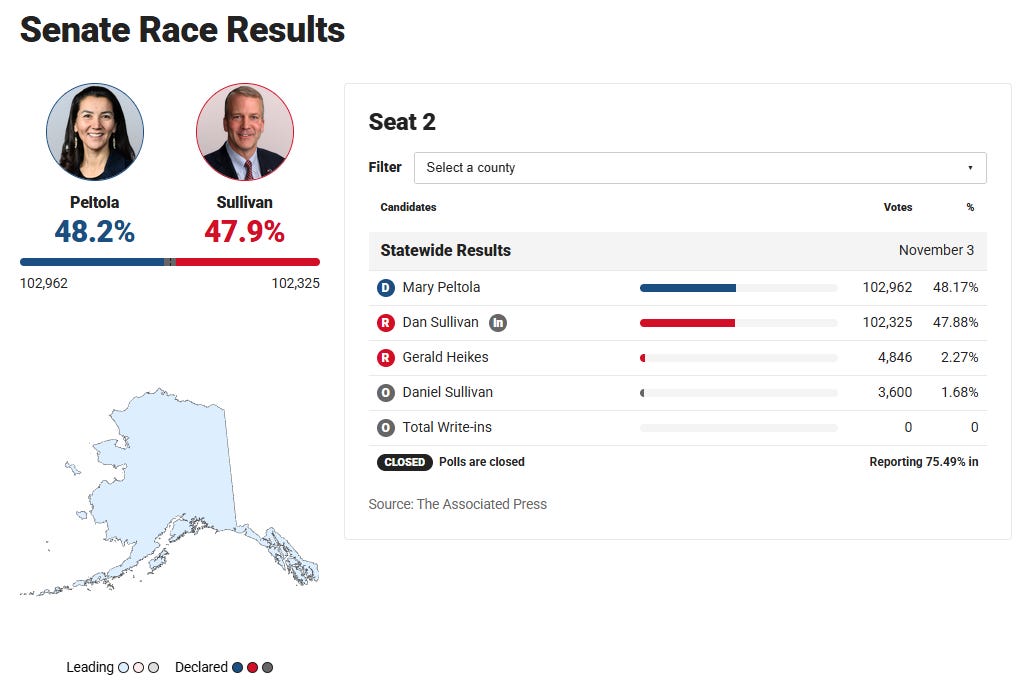
As of the writing of this article, Daniel J. Sullivan - who was recruited in an effort to mislead voters - has received 3,600 votes. Under Alaska’s ranked-choice tabulation, if he remains in last place then his 3,600 votes would have their second-choice voices tabulated. This process of redistributing votes repeats until one person secures more than 50% of voters. In other words, while Democrats may have been able to fool some voters, it remains to be seen whether their efforts will ultimately be successful.
In other news:
This week, the DOJ announced that 63 individuals, including four illegal aliens, were charged “in connection with illegal voting, fraudulent voter registration, and related election crimes across the country.”
A California woman has been charged relating to an $18 million COVID-19 relief fraud scheme, where she is alleged to have submitted applications with false statements and misrepresentations to obtain over $15.7 million in Paycheck Protection Program funds and $2.6 million in funds that were distributed as part of a Coronavirus relief act.