Three media organizations - CNN, Politico, and MS NOW - have sued the Trump administration after the President ended their access to the White House. The DOJ has indicted a Utah postal carrier for trashing mail-in ballots. A federal court addresses whether a lack of air conditioning in Texas prisons is unconstitutional, and the Eighth Circuit Court of Appeals gives a big win to Republicans in Missouri.
The Fake News sues Trump
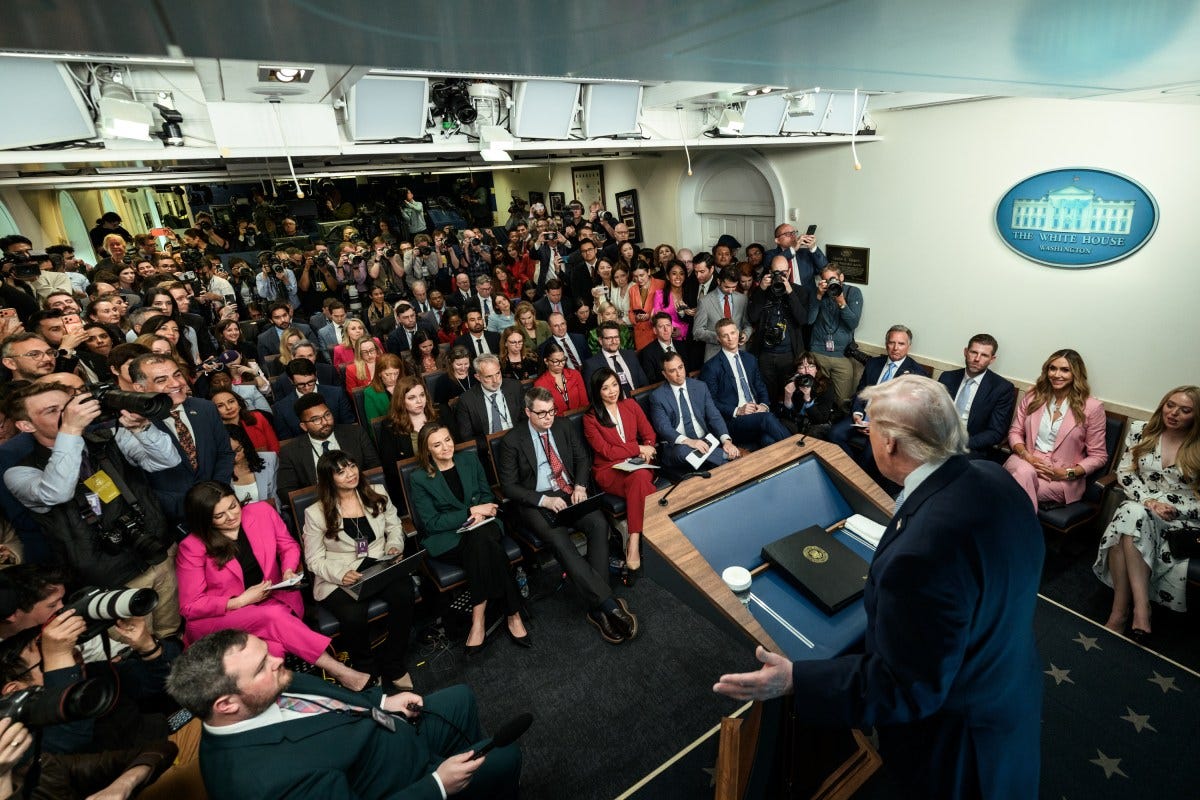
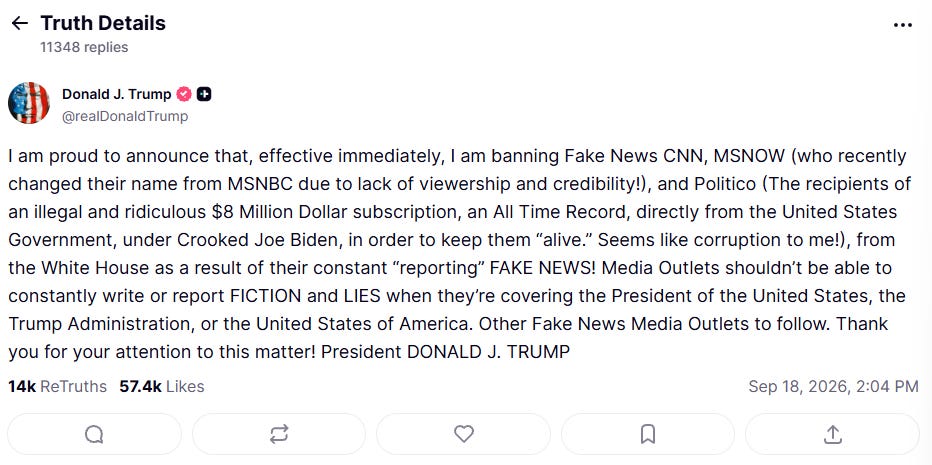
CNN, Politico, and MS NOW (former MSNBC), along with White House reporters from these organizations, sued President Donald Trump and members of his administration after he announced that he banned these media outlets from the White House:
According to their complaint, filed on the morning of Monday, September 21, journalists from these news organizations are “not permitted anywhere on the grounds of the White House complex.” Their “hard passes” which gave them access to the White House have been deactivated and were seized when they attempted to enter the White House. The lawsuit alleges the ban is a “direct assault on the First Amendment” and “blatant violation of our most fundamental constitutional principles” - including the Due Process Clause.
In conjunction with the complaint, the plaintiffs requested a temporary restraining order be issued to restore the status quo pending the litigation. This case is before Judge Timothy J. Kelly, a Trump appointee.
The Trump administration has responded that the President can “set standards governing qualifications for journalistic access” – and thus may restrict access to those entities and individuals that violate those standards. It also argues their reporting has raised significant national security concerns, and that the plaintiffs have been provided with “sufficient” due process by providing them with notice of the action and an opportunity to be heard.
This case presents interesting constitutional issues. For starters, there is no First Amendment right of access to the White House for the press – or the public. See Zemel v. Rusk, 381 U.S. 1, 17 (1965) (observing that entry into the White House is not “a First Amendment right”). But in the D.C. Circuit, the suspension of a hard pass – or access by a network or journalists – implicates First Amendment rights. Thus, the courts look to the Due Process Clause of the Fifth Amendment and whether a person receives notice of the conduct that will subject him to discipline and notice of the severity of the penalty the government may impose.
Prior cases in the Court of Appeals for the District of Columbia Circuit show that this will be a difficult case for the administration to win. After reporter Brian Karem challenged a 30-day suspension from the White House during Trump’s first term, the D.C. Circuit held that Karam’s due process claim was likely to succeed because he did not have adequate “notice of the magnitude of sanction” for his “unprofessional conduct.”
On September 23, Judge Kelly heard the arguments on CNN, Politico, and MS NOW’s challenge to their ban. From the beginning of the hearing, Judge Kelly seemed to believe that the plaintiffs would succeed in their due process arguments based on precedent from the D.C. Circuit.
Early Thursday morning, Judge Kelly granted a 14-day temporary restraining order requiring the Trump administration to restore the hard passes of employees of CNN, Politico, and MS NOW. The parties will brief the issue during that time, giving the court the ability to make a more permanent ruling.1
In other news:
On September 22, the Department of Justice announced that a Utah postal worker was indicted for throwing over 300 mail-in ballots into a dumpster. These ballots were meant for residents to vote in the June 2026 primary election. The DOJ also announced that it has “charged 32 aliens with unlawful voting and registration offenses.”
The Court of Appeals for the Eighth Circuit has ruled that Missouri must use a map adopted in 2025 – and used in the August 2026 primary election – for the November 2026 general election. Previously, the Missouri Supreme Court had enjoined the State from implementing the 2025 map.
A federal judge has ordered Texas to install air conditioning in every Texas prison by the end of 2029, concluding that the conditions of confinement in Texas’s prisons without air conditioning violates “the Eighth Amendment rights of all inmates housed in those facilities.”
The Wisconsin Supreme Court has declined to summarily suspend the law license of Hannah Dugan, a former Wisconsin judge who was convicted of obstructing federal agents who sought to detain an illegal immigrant who had been charged with domestic violence offenses. While this is not the normal practice of the Wisconsin Supreme Court, the State’s Office of Lawyer Regulations may still proceed with disciplining Dugan.
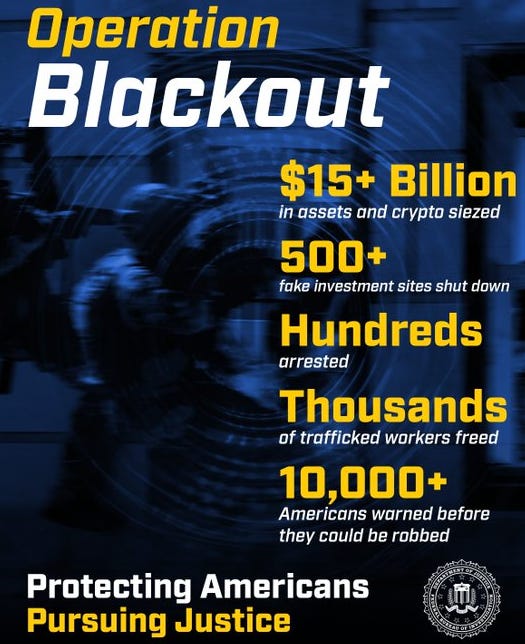
The FBI has posted an update on Operation Blackout, which has helped to dismantle international fraud schemes that target Americans. Since its inception, the operation has seized $15+ billion in assets and crypto, shut down over 500 fake investment sites, and has resulted in the arrests of hundreds of criminals.
Updated on the morning of September 24, 2026 to reflect Judge Kelly’s order.